


My son was 12 when he walked into our living room, his face that of a kid who had to disseminate news I didn’t particularly want to hear.
I was standing in front of a large poster board where I had carefully mapped out his running workouts for the next several months.
Related posts


The thing is, Ky’s 5K times were dropping. A capable distance runner, he had just won a race in an impressive time, and I could already see the future. Arlington High School. Division I College scholarship. Who knows what after that.
I had run in high school, college, and afterward as a 5K competitor. Running was something I understood. You put one foot in front of the other faster than the people around you. There were no offside calls. Nobody received a yellow card. Nobody collapsed dramatically because another runner brushed against his shoulder.
Ky sat down.
“I don’t want to run anymore.”
I stared at him. He stared at me. I said, “Okay.”
He got up and walked away. A tremendous weight had been lifted from his shoulders and landed directly on mine. Eventually, I asked what he wanted to do athletically, making it clear he had to do something athletically.
“Soccer,” he said. Of course.
The last time Ky had played soccer, he was 5. We were living in Palo Alto while I finished a journalism fellowship at Stanford. Halfway through the first practice, Ky walked off the field, sat down, removed his shoes, and announced, “I’m done.” And he was.
After our gut-busting chat, Ky started playing recreationally with the Arlington YMCA and eventually joined a Fort Worth soccer team. I remember going to every practice (someone had to drive him) and every game (someone had to cheer for him). That was my official explanation until something strange happened.
I started watching. Really watching. I began noticing the spacing. The passing. The anticipation. The way defenders communicated without saying much. The way a play could build from seemingly nothing and suddenly everybody on the sideline was standing.
I learned that 1-0 could actually be exciting.
This was disturbing. The sport I had dismissed as a bunch of people jogging around for 90 minutes while occasionally kicking a ball had become something I looked forward to.
Which brings us to Arlington.
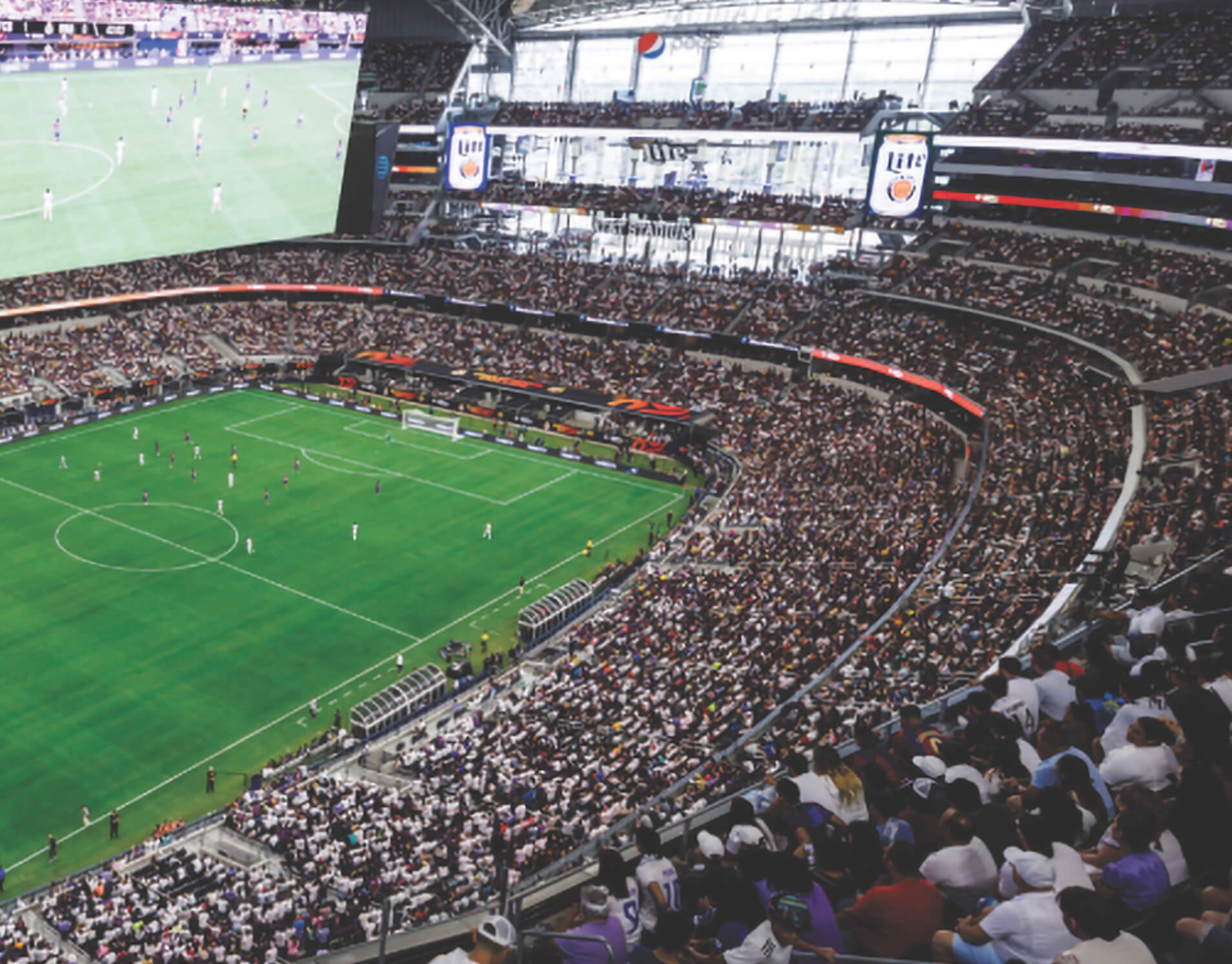
The World Cup has packed up and moved on, leaving us to calculate what we gained.
And we will calculate … How many hotel rooms? Restaurant meals? Beers? Visitors? Dollars?
Before the tournament, North Texas officials estimated a regional economic impact of $1.5 billion to $2 billion from the World Cup. Arlington hosted nine matches and crowds from around the globe.
J. Gilligan’s and plenty of other local businesses fed, transported, and entertained people who came here speaking different languages but could instantly communicate by putting on the same jersey and screaming at a television monitor. That money matters.
But I wonder if we’re counting the wrong thing, at least in the long run. Maybe Arlington’s biggest World Cup payoff can’t be deposited in a bank. Maybe it is the kid who watched his first match and now wants a soccer ball. Maybe it is the parent who never understood the sport but suddenly gets why people from Argentina, England, Japan, Mexico, or anywhere else can spend their lives emotionally attached to 11 people wearing matching shirts.
Soccer has something our American sports sometimes make complicated: entry is easy.
Find a ball. Find some space. Play. The language doesn’t matter much. Neither does where you come from.
For a few weeks, Arlington experienced something other countries have lived with for generations—the strange tribal pull of soccer. People who had never met became temporary family because they wore the same colors. They sang together. Marched together. Celebrated together in Walmart, of all places. And occasionally suffered together.
That culture isn’t disappearing because the World Cup did. North Texas already has FC Dallas up the road in Frisco and women’s professional soccer with Dallas Trinity FC. And just down the road from Arlington, the new Texas Health Mansfield Stadium has opened as the home of North Texas SC.
There are more places to watch. More places to play. More chances for another 12-year-old to walk into a living room and devastate his father.
Years ago, I thought Ky quitting running meant he was giving something up.
Turns out, he was giving me something. He taught me how to see a sport I had never bothered to understand. The World Cup may have done the same thing for Arlington.
We’ll count the hotel receipts and restaurant tabs because those are easy to count. But years from now, if more kids are playing, more parents are watching, and more people around here understand why the rest of the world goes completely bonkers over a ball rolling toward a net, that will be harder to measure.
And probably worth more.
Kenneth Perkins has been a contributing writer for
Arlington Today for more than a decade. He is a freelance writer, editor and photographer, and teaches Journalism and Writing at Bowie High School.