

Reaching 30 years is both humbling and deeply meaningful for HOPE, especially given the challenges nonprofit organizations have faced in recent years. As a nonprofit, HOPE does not operate to generate profit. Its mission has always centered on giving back to the community and investing directly in families and students who need support the most. Surviving COVID, navigating economic uncertainty, and continuing to show up for families during some of the hardest years on record make this milestone especially hard-earned.
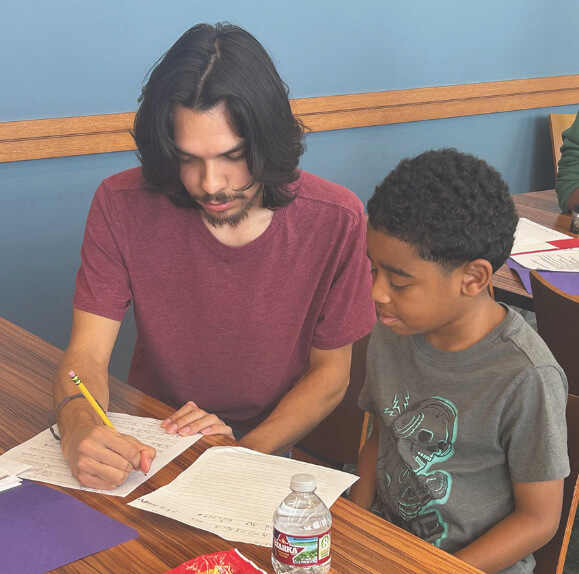
What makes the anniversary particularly powerful is seeing the long-term impact of that commitment. Former students who once participated in HOPE’s programs are now graduating and returning as volunteer tutors, choosing to give back to the organization that helped shape their confidence and opportunities. It is a full-circle moment that reflects how HOPE’s work ripples beyond one child or one family and into future generations.


While HOPE’s tutoring programs focus on academic growth, Parent Power Hour expands that impact by equipping parents with the knowledge, tools, and confidence to support their children beyond the classroom. The program was created with a simple belief in mind: supporting students means supporting families as well. Through expert-led discussions, families learn about learning styles, academic strategies, and ways to strengthen their children’s self-esteem. As Stephanie Arredondo, Executive Director of HOPE Tutoring Center, explains, the goal is to create “a village-like mentality,” strengthening bonds between families, parents, children, and the organization itself.
Sometimes the most powerful success stories are not about where a student begins, but who they become. Seeing a former student return as a volunteer tutor after graduating from the program, following five years of participation, is one of the most powerful affirmations of HOPE’s mission. After graduating, she was invited to HOPE’s annual gala, where she received an achievement award recognizing her growth and perseverance. Once lacking self-confidence, she is now able to encourage and support another student walking a similar path.
Lighting the Spark: How HOPE Transforms More Than Academics
While academic improvement is a key outcome of HOPE Tutoring Center, the benefits extend far beyond grades. At the core of HOPE’s work are confidence-building, mentorship, and meaningful connections. Students form genuine relationships with their tutors, creating an environment that feels supportive and engaging. For many, HOPE becomes a place where learning finally feels accessible rather than intimidating.
Arredondo describes this transformation with a powerful metaphor. She compares students to a Christmas tree decorated with ornaments and lights; everything is in place, but there is no spark. “HOPE is the one plugging it in,” she explains. Suddenly, everything comes to life. Without HOPE, she reflects, some of those lights may never turn on at all, a reality that continues to drive the organization’s mission to reach more families.
The Future of HOPE Starts With You
Looking ahead, Arredondo is clear about one message: this is not a school district issue; it is a community issue. An estimated 6,000 to 7,000 students in the Arlington area are behind grade level. “It is not due to the districts being behind, not due to teachers having underperformance,” she emphasizes. Students learn differently, and many need individualized support beyond traditional systems. Currently, HOPE serves only about one percent of that population.
Expanding HOPE’s reach requires people willing to show up. A great HOPE volunteer is someone who cares authentically about students and commits one hour per week throughout the semester. No teaching background is required; HOPE provides training, curriculum, and onboarding. Equally vital is financial support. Donations allow HOPE to keep its doors open and programs running. Funding is intentionally diversified, with approximately one-third coming from the City of Arlington’s Community Development Block Grant, one-third from an anonymous individual donor, and the remaining third from grants and community donations. As Arredondo puts it, HOPE is “110 percent nonprofit,” reinvesting every dollar into students and families.
Arredondo also expressed gratitude to Women Inspiring Philanthropy for a $50,000 grant, Garver Gives for a $3,000 grant, and Good Shepherd Methodist Church, which provides HOPE’s space rent-free, saving approximately $6,000 per year. That support helped HOPE double attendance at its free Summer UTA STEM Camp and recognize Arlington ISD School Board President Justin Chapa with the Heart of HOPE Award, voted on by the community.
Together, these partnerships demonstrate what is possible when a community invests in its students, and why HOPE’s future depends on continued support.