

It’s difficult to grasp how big a deal this summer in Arlington is going to be. The FIFA World Cup is one of the few events where, for a few weeks, the entire world focuses on a single location at once. It only comes around every four years, and the scale is hard to fully comprehend. In American terms, it’s the equivalent of over 100 Super Bowls, with over half of the world’s population tuning in at some point. People plan years in advance, travel across continents, and in some cases make real sacrifices just to attend in person.
This year, Arlington is right in the middle of that global spotlight. Not just as a host city, but in a way that places us at the center of the entire tournament footprint. We will host nine matches, more than any other city, and Dallas will serve as the home for the International Broadcast Center. With DFW Airport connecting to all other match locations, we will function as one of the primary hubs for the tournament. From June 14 through July 14, culminating in a World Cup semifinal, Arlington will experience a level of sustained activity unlike anything we have seen before. It will likely be the highest concentration of tourism our city has ever experienced, not just in volume, but in the global diversity of its visitors.
Related posts

Naturally, much of that energy will concentrate in the Entertainment District. It is designed for moments like this, and it will deliver on that scale in a way few places in the world can. But in Downtown Arlington, we have been focused on a different part of the experience, one that does not compete with the stadiums and the soccer matches, but instead fills the gaps around them.
There has been a lot of discussion nationally about how host cities handle moments like this, and whether they give visitors a chance to experience something beyond the event itself. One of the more interesting takes I came across was an article in Planetizen, which pointed out that while matches draw crowds, surrounding neighborhoods and downtowns shape how people actually remember a place. That idea has stuck with me throughout this process. Large venues bring people in, but they do not necessarily tell the story of a community.
Downtown has been building toward this moment for a while now. Between Cowboys seasons, Rangers games, and the steady increase in major events, we have had opportunities to test ourselves in real conditions. We have seen the crowds and the pressure, and we have adjusted along the way. In many ways, this feels like the culmination of that work. Through it all, Downtown has become a regional destination ready for prime time.
We have been planning for this for over a year, working at both the regional level through World Cup organizing committees and locally with our businesses and partners to make sure Downtown Arlington is ready. We have also worked closely with our businesses to prepare for the practical side of hosting, especially when it comes to safety and hospitality. That means shade, seating, and water, the simple things that matter when you are welcoming people to Texas in the summer.
We are inviting visitors and locals alike to “Kick it in Downtown.” You will hear live music as you move through the streets, run into murals and art installations that were not there the last time you visited, and find places to sit, cool off, and stay awhile. There will be small moments throughout, including soccer-themed activations, shaded hangouts, and spaces that encourage people to slow down.
One of the projects that captures that idea well is the 150th anniversary mural that will be installed just before the tournament during our June First Thursday. The concept centers on the American Dream, expressed through a wide range of languages and cultural perspectives, which feels especially relevant given the timing. It is a reminder that Arlington has always been shaped by people who came from different places to build something together, and that message takes on a different weight when the audience expands to a global scale.
I have found myself thinking differently about Arlington. Growing up and even into my professional life, I have always associated the broader identity of Texas with Dallas and Fort Worth. Arlington has often sat somewhere in between, without the same kind of cowboy identity as Fort Worth or the larger-than-life branding of Dallas. But seeing how the World Cup will bring people here from around the world, many of whom may only visit one place in this region, has shifted that perspective. For many visitors, Arlington will define their perception of Texas. And while the matches themselves will be broadcast from what the world will hear called “Dallas Stadium,” we have been working closely with the Arlington Convention and Visitors Bureau to make sure that when people step outside that campus, they know exactly where they are. You will see Arlington on storefronts, sidewalks, and street corners, and more importantly, you will feel it in how people are welcomed.
We may not lean as heavily into traditional imagery, but what we offer is genuine. It is a place where people run their own businesses, where conversations happen naturally, and where the experience does not feel overly curated. That authenticity is not something you can manufacture, and visitors recognize it quickly.
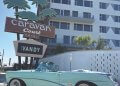
Aside from the public art, face-painted fans, and impromptu meetups that are sure to happen, the part of this I am most excited about is actually pretty lame. It is a three-foot-wide stretch of asphalt along Collins Street that we call a sidewalk. This piece of infrastructure has been the missing link between Downtown and the Entertainment District for over 20 years. I am no fool. I know this sidewalk will not funnel thousands of visitors, but it is a foundational piece needed to connect these districts, especially with the Caravan Court Hotel opening in early June right in between them.
For all of the scale and complexity surrounding the World Cup, what it comes down to at the local level is fairly simple. It is an opportunity to show people who we are.
For residents, that might mean seeing Downtown in a different light or choosing to be part of the activity rather than avoiding it. For visitors, it is an invitation to step beyond the main event, spend time somewhere not on every itinerary, and experience something that reflects the local community.
Downtown is going to feel active, but not chaotic. I am trying to help people understand the scale of this event without scaring anyone away. Sure, during match days between June 14 and July 14 certain areas near the stadium will naturally see higher activity, while Downtown will offer a different pace. You will still feel connected to the action, enjoying a more relaxed Downtown experience. Downtown will be ready, and we’re looking forward to welcoming the world to Arlington.
Garret Martin is Vice President of Downtown Arlington Management Corporation.