
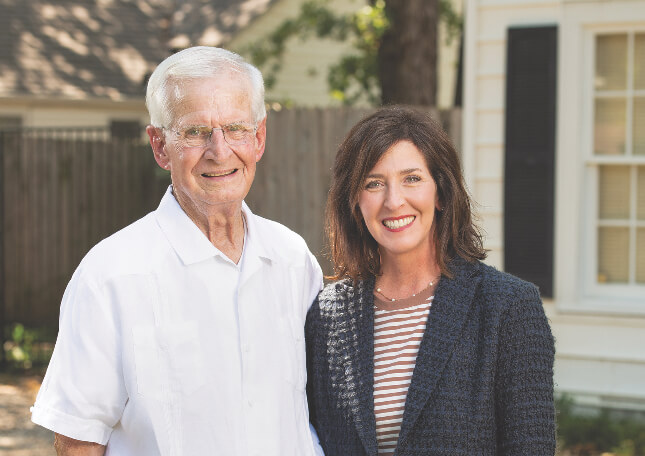

Long before Arlington became a destination for professional sports, entertainment, higher education, and major business, the Cravens family was already building a life in the community. Their roots stretch back to the 1880s, creating a family history intertwined with medicine, education, law, banking, civic leadership, and public service. Over the generations, the Cravens name has appeared on an athletic field, within local institutions, and throughout some of the efforts that helped shape modern Arlington. Yet Tom Cravens does not measure his family’s history by the recognition attached to its name. To him, the legacy is much simpler: each generation has inherited a responsibility to contribute to the community that gave the family so much.
“Being a Cravens in Arlington has never been about a name or recognition,” Tom said. “To me, it has always meant being part of a community that has given our family so much over several generations.” Arlington has been home to his parents, children, and grandchildren, making the city inseparable from the family’s story. “I have always felt a responsibility to give back to a city that has provided so many opportunities to our family,” he said. “If there is anything I am proud of, it is simply that each generation has tried to leave Arlington a little better than we found it.”
Related posts


Roots That Run Deep
One of the family’s earliest Arlington chapters began with Dr. M.H. Cravens, who came to Texas after completing his medical education in Kentucky and established a practice in Arlington in the 1880s. His career grew alongside the young community, eventually making him a prominent physician serving Arlington and the surrounding area. The family later became closely connected with another significant name in local history when Dr. Cravens married Mary Carlisle, daughter of educator James M. Carlisle. James Carlisle had served as Texas superintendent of public instruction. He founded Carlisle Military Academy on property associated with the early history of what eventually became the University of Texas at Arlington. Those family connections placed education and service near the center of the Cravens story from its earliest generations.
Mary Carlisle Cravens created her own legacy through civic involvement, including founding Arlington’s Shakespeare Club. Even Mary Street reflects the family’s history. After her death, Dr. Cravens smoothed a rough path to Arlington Cemetery that residents began using as a road, eventually known as “Mary’s Street” and later Mary Street. The story shows how deeply the Cravens family became woven into everyday life in Arlington.
That tradition continued through Carlisle Grove Cravens, born in Arlington in 1908. Carlisle graduated from Arlington High School in 1924 before attending North Texas Agricultural College, a predecessor of today’s UT Arlington, and later earning his law degree from the University of Texas. He returned to the area and built a distinguished legal career with Cantey & Hanger, eventually rising to managing partner, while also serving as a U.S. Navy lieutenant in the South Pacific during World War II. Back home, Carlisle became deeply involved in Arlington’s schools, businesses, and civic organizations, serving on the Arlington school board and helping organize First National Bank in Arlington, where he became its first president. He was also an advocate for transforming Arlington State College into a four-year institution, which was accomplished in 1959, and later served on the Texas State Board of Education.
Carlisle’s name remains visible today through Cravens Field at Lamar High School and Cravens Park on land he and his wife, Jimmie, donated to the city, but Tom says his father’s greatest influence could not be captured on a sign. What endured were lessons about responsibility, character, and service that Tom would eventually pass to his own children. “The lessons were simple but powerful,” Tom said. “Work hard, treat people with respect, keep your word, and look for ways to serve others.” His parents and grandparents taught him that leadership was less about holding a title than being willing to become involved, help when needed, and invest time in the people around him.
Tom grew up in an Arlington that would be almost unrecognizable to many residents today. Fielder Road was still a dirt road when his father built the family homestead in the late 1930s, a home where Tom still resides. Back then, community life centered on local schools, football games, churches, movie theaters, neighborhood gatherings, and small businesses. Arlington was a place where neighbors knew one another, friendships lasted a lifetime, and it was nearly impossible to go anywhere without seeing a familiar face. Tom also remembers being taught by educators whose names would later appear on Arlington schools (Martin, Nichols, Workman, Amos, Atherton, Bebensee, Butler, Crouch, Duff, Corey, Key, Pope, Sherrod, Swift, Webb, Williams, Wood). Another reminder of how personal the community could feel. “My earliest memories are of a much smaller town where people knew one another and life moved at a different pace,” he said. Although Arlington’s skyline, population, and opportunities have changed dramatically, Tom believes the city has retained much of the community spirit that defined his childhood.
Rebuilding the Heart of the City
That belief became especially important when Tom began working to revitalize downtown Arlington in the 1980s. At the time, many people viewed downtown as an area whose strongest years were behind it, particularly as development spread throughout other parts of the city. Tom saw something different in the historic buildings and streets. “I saw history, character, and opportunity,” he said. “Downtown was where many of Arlington’s stories began, and I believed it could once again become a gathering place for residents, businesses, and visitors.” Restoring downtown, in his view, meant restoring an important piece of the city’s identity.
The work required patience because revitalization could not happen through one development or one person’s efforts. Tom worked alongside businesses, residents, and civic leaders to encourage investment and rebuild confidence in the district’s future. “Revitalization was never about buildings alone,” he said. “It was about creating a place where people wanted to spend time, build relationships, and invest in the future of the community.” The Downtown Arlington Management Corporation recognized those efforts in 2016 by presenting Tom with its inaugural Dream Builder Award, honoring his long-term impact on the city’s historic core.
The transformation did not happen quickly. One of the biggest challenges, Tom remembers, was convincing people that meaningful change was possible after years of decline and uncertainty. “Transforming a downtown district takes patience, partnerships, and a willingness to think long term,” he said. Eventually, businesses began investing, events drew more families, and residents started treating downtown as a destination rather than simply a place to pass through. Projects such as the Levitt Pavilion, renewed downtown living, and redevelopment of older properties helped create the activity Tom and others had envisioned decades earlier.
Tom is quick to shift the credit away from himself. He instead points to the collective effort required to turn downtown into an active center for restaurants, businesses, entertainment, cultural events, public spaces, and residential development. “What makes me proud is not any single project,” he said. “I am grateful to have played a small part, but the success belongs to a community that chose to believe in itself and invest in its future.” That attitude reflects the same philosophy he associates with earlier generations of his family: contribution matters more than credit.
Service Across Generations
Tom’s children have carried that same spirit of service into their own careers, and both daughters married classmates from Arlington High. Kyndal, a 1987 AHS graduate and former teacher in Arlington, is married to Todd Nicol, also a 1987 AHS graduate. They raised two of their three kids in the Arlington School District before settling on Lake Granbury to be closer to Todd’s work and passion for watersports. Tom’s daughter, Judge Mary Tom Cravens Curnutt, is a fifth-generation Arlington resident who married her Arlington High School sweetheart, local attorney Kelly Curnutt. After building a successful business career, she returned to her hometown and went on to serve as Tarrant County Justice of the Peace for Precinct 2. They also raised three boys in the Arlington school district. Her path reflects the family’s long tradition of combining professional leadership with community service.
Mary Tom has also maintained a direct connection to her father’s passion for downtown Arlington. She became involved with the Downtown Arlington Board of Directors and has served as its board chair, while she and Kelly also became downtown property owners through their partnership in purchasing and renovating the Curnutt & Hafer Attorneys at Law building on Abram Street. Asked previously which Arlington leader inspires her, Mary Tom pointed directly to her father. “My dad, Tom Cravens, inspires me because he always gets down in the trenches and works hard, leaves everything better than he found it, and lives to serve others,” she said. Her description closely echoes the values Tom remembers receiving from his own parents, illustrating how the same philosophy has traveled through generations even as careers and opportunities have changed.
Tom’s son Carl Cravens has also built a career closely tied to Arlington. A 1990 Arlington High graduate, he has more than 30 years of commercial banking experience and now serves as president and chief banking officer of Susser Bank. He is married to Lisa, who was a teacher in the AISD and has served the community through student organizations and not-for-profits, and is a former president of Junior League, an organization that Tom’s wife, Diane, founded in Arlington. Carl’s career has included leadership roles at Southwest Bank, BBVA Compass, and JPMorgan Chase. Carl also earned an MBA in finance from UT Arlington, continuing the family’s longstanding connection to the university.
Carl’s community involvement extends well beyond banking. Over the years, he has held leadership positions with organizations including Texas Health Arlington, the Greater Arlington Chamber of Commerce, and the Arlington Convention & Visitors Bureau, and he has also served in regional economic development leadership. He was among the founding members of Miracle League DFW, a baseball program created to give children and adults with disabilities opportunities to participate in the game. Like Tom and Carlisle before him, Carl’s professional life has existed alongside continued involvement in Arlington’s civic and nonprofit communities. His path demonstrates how the family tradition has evolved with each generation rather than requiring everyone to serve Arlington in the same way.
Carrying the Legacy Forward
That legacy has now reached another generation through Carl and his wife Lisa’s children. In 2026, their son Coleman Cravens became the fourth generation of Cravens men to graduate from Arlington High School, following great-grandfather Carlisle in 1924, grandfather Tom in 1960, and father Carl in 1990. Coleman finished his senior year ranked third in his class, balancing academics, athletics, orchestra, leadership, and extracurricular activities. Known as Arlington High’s starting quarterback, he also played viola in orchestra, participated in Key Club and National Honor Society, competed in bass fishing and track, was a Davey O’Brien Scholarship winner, and added golf to an already full schedule. His older sisters, Mary Nelle and Edie, also contributed to the family’s Arlington High tradition as cheerleaders (like their Aunts, Kyndal and Mary Tom) before attending business school at the University of Texas at Austin, where Coleman is also attending this Fall.
For Coleman, the family history has been impossible to miss, but he has also worked to define what leaving his own legacy means. “I’m definitely proud to be an Arlington Colt,” he said. “Just like my great-granddad, my granddad and my father, part of that makes me feel like I need to leave a legacy just like they did.” That sense of history became especially tangible when Coleman played at Cravens Field, the stadium named for his great-grandfather Carlisle. Carrying the same last name displayed on the field created pressure, Coleman acknowledged, but it also gave him an experience connecting several generations of his family in one place.
His mother, Lisa, has said the family wanted Coleman to understand and appreciate that history without feeling obligated to live in its shadow. From an early age, he listened to stories about Arlington and his family’s roots there, often absorbing more than the adults around him realized. Yet what mattered most to her was that he remained true to himself, pursuing his own interests and opportunities rather than feeling constrained by expectations. That perspective reflects Tom’s belief that honoring the past should inspire the next generation, not prevent them from forging their own path.
For Tom, watching his children and grandchildren continue their connection to Arlington has been one of the greatest rewards of a lifetime spent in the city. “Arlington High School has connected multiple generations of our family, but what matters most is not the tradition itself,” he said. What matters is seeing each generation develop individual talents, interests, and ways to serve. “Every generation should honor the past, but it should also be willing to build something new.” The Cravens legacy, in that sense, has never depended on everyone following the same road.
A Community That Keeps Growing
The family’s idea of community also extends beyond people who can trace their Arlington roots back generations. Tom believes one reason the city has succeeded is its willingness to welcome newcomers and new ideas, and he has practiced that hospitality personally by opening his guest home to people over the years. Mary Tom has similarly described “connection” as essential to downtown Arlington’s long-term success. Whether through community organizations, businesses, neighborhoods, schools, or simply welcoming someone new, the family views relationships as part of what allows a growing city to retain its identity. That belief becomes increasingly significant as Arlington continues attracting residents and opportunities that earlier generations could never have imagined.
“What has always made Arlington special is its people,” Tom said. “This city has succeeded because generations of residents, business leaders, educators, volunteers, and public servants have cared deeply about its future.” He hopes future leaders will continue welcoming new ideas without losing the collaborative spirit that allowed Arlington to transform from a small town into a major city. Growth, he believes, should create opportunities while preserving the relationships that make people feel connected to where they live. The challenge for each new generation is finding a way to accomplish both.
Seen together, the Cravens family’s history reflects Arlington’s transformation from a small Texas town into a major city. Dr. M.H. Cravens represents its early years, while the Carlisle connection ties the family to Arlington’s educational roots. Carlisle Grove Cravens contributed through law, banking, healthcare, education, and advocacy for what became UT Arlington, while Tom helped lead downtown revitalization as the city grew. Mary and Carl continued that legacy through the courts, business, banking, economic development, and community leadership, while Coleman’s generation is beginning to define its own role in Arlington’s future.
Tom is careful not to let the family’s story overshadow the city that made those opportunities possible. “I hope people remember that the Cravens family loved Arlington and tried to serve it well,” he said. “Any accomplishments associated with our family were only possible because of the opportunities this community provided.” He sees Arlington’s history as something written collectively by thousands of residents willing to volunteer, lead, invest, teach, build businesses, and believe in what the city could become. “We have simply been fortunate to be part of that story.”
That may ultimately be the clearest definition of the Cravens legacy. The fields, parks, streets, businesses, institutions, and leadership positions provide visible markers of a family’s long relationship with Arlington, but Tom places greater value on what happened behind those markers. Each generation inherited a community shaped by people who came before and then faced the responsibility of deciding what it could contribute before passing it along. “If there is one thing I would want readers to know, it is how grateful our family is to call Arlington home and to have shared in its growth over the years,” Tom said. For the Cravens family, leaving a legacy has never simply meant being remembered; it has meant leaving Arlington a little better than they found it.