

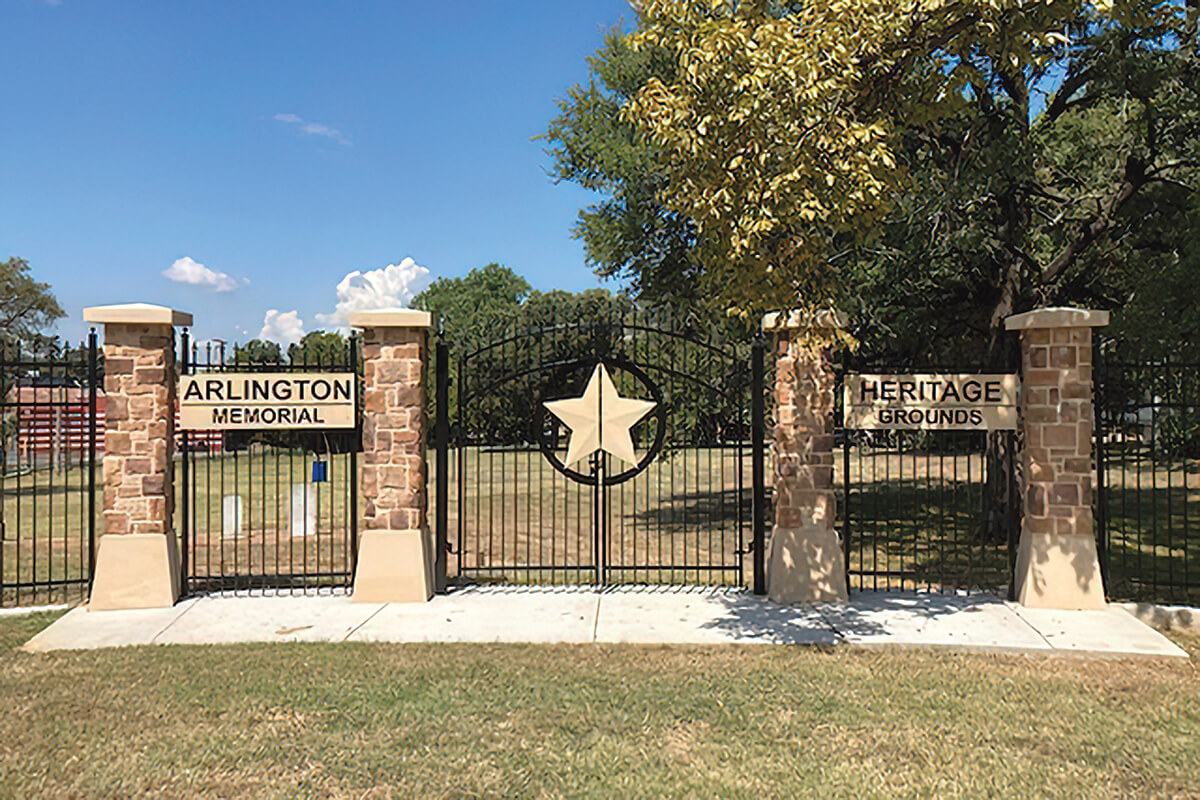

As the celebration of Arlington’s 150th Anniversary continues, the city’s earliest settlers first arrived more than 25 years before the actual founding of what would become one of the most vibrant urban centers in the country.
Next month, there will be an opportunity to walk in their footsteps and explore some of their final resting places in the recently restored Arlington Heritage Memorial Grounds – a $400,000 project funded by the Arlington Tomorrow Foundation and another 1,500 or so individuals and local businesses.


On Saturday, May 16, from 11am-2pm, you may join guided tours to explore the grounds individually. Parking is available next to the entrance and across the street in the park. You will find it at 600 West Arkansas Lane.
Mark your calendar now to celebrate this historic burial ground where Arlington’s original inhabitants are to be remembered – they are the ones who made a living from the soil and first called this place their home.
I wrote about the dedication of the restoration of this project a couple of years ago. Here’s part of that story:
There were originally three sections of the burial ground that existed on the property, including The Mill Branch Cemetery, The Middleton Tate Johnson Family Cemetery, and the Colored Cemetery. The result of the work to protect the cemetery was to first develop a barrier around the perimeter.
It was obviously sorely needed as the property had suffered vandalism, damage to the headstones, and the presence of homeless encampments.
The property is now fully secured by major fencing that is also decorative. Passersby on Arkansas Lane will now recognize the property as something of significance to Arlington’s history.
Inside, visitors can use the paved walkways throughout and pause at pedestals along the way with QR codes they can scan with their mobile phones and find descriptions of what they are viewing. They will learn that the first burials took place in the 1850s and continued for the next 100 years.
There’s adjacent parking, four lighted American, Texas, Arlington, and Tarrant County flags signifying the national, state, and local connection to the city’s first citizens buried here.
“They all played a role in the establishment of our community,” Arlington Historical Executive Director Geraldine Mills explained, “Whether the landowner harvesting wheat, corn, and cotton or those who labored as workers, their lives mattered, and they must not be forgotten.”
Chair of the venture’s fundraising committee, Chaplain Rich Stoglin, described the mission and purpose of the project, “Cemeteries are a great historical archive because they ask the question, ‘Who were these people? How did we get started? What did they have to face? In addition to that, it’s an educational opportunity for citizens to come and find out where this great city of 400,000 and growing started from.”
Among the graves is the final resting place of Colonel Middleton Tate Johnson, known as the Father of Tarrant County and one of the most prominent Texans of his time. First buried in the Texas State Cemetery in Austin, his body was later moved here to join other members of his family at final rest here.
The namesake of the colonel, Johnson Creek, runs along the western boundary of the cemetery property and served as a water source for the establishment of life and building a local economy on the prairie here – something hard to imagine in today’s urban setting.
Now fully accessible to the public, it’s an opportunity to spend an hour or so and reflect upon those who first called what would become Arlington their hometown.
Check out the whole story here at ahmgc.org.