

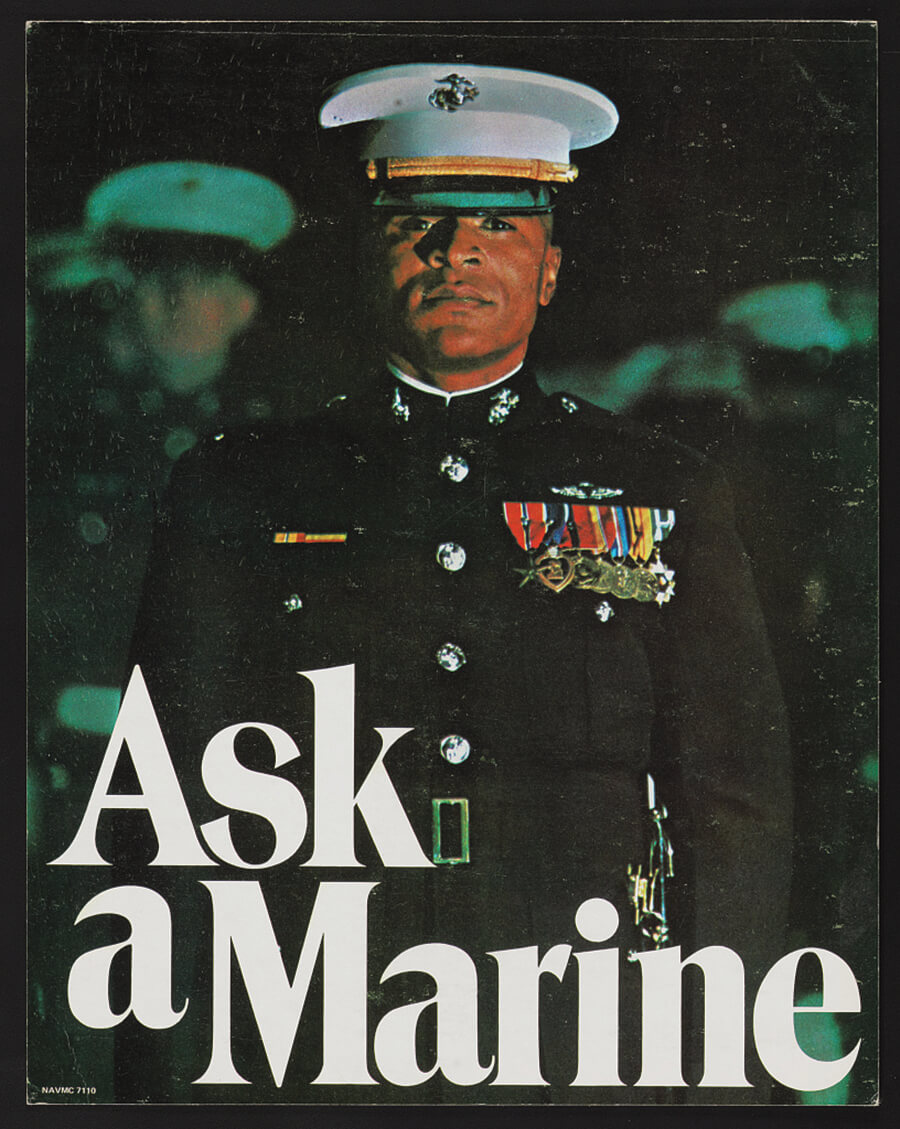

In 1956, James Capers Jr. graduated from high school in Baltimore, Maryland, and enlisted in the Marine Corps. It was the start of a distinguished career as a Marine, of decades of service, and leadership under extreme circumstances that eventually led to Capers receiving the Medal of Honor.
Born in 1937, Capers’ early years were in South Carolina. His parents, James Sr. and Vurly, lost four children before James Jr. was born. As sharecroppers, they moved their four surviving children from farm to farm. Living in the South in the era of Jim Crow, Capers recalled that his parents shielded him and his siblings from the “horrors of our circumstances.” Despite the hard existence of a sharecropping family, the Capers children attended school, with the hopes that one day they would have more opportunities than their parents. When Capers was still a toddler, his father left for Baltimore after defending his wife against a laundry client. For a Black man in the South in the 1930s, such an interaction could have drastic consequences, and the decision was made for Capers Sr. to go to Baltimore and have the family follow after he was settled.
Related posts


Baltimore offered more for the Capers family, and they found community and opportunity there. Capers attended Carver Vocational High School, where he studied carpentry, found a love of reading, a gift for poetry, and met his future wife, Dottie. As high school came to a close, Capers and his best friend decided they would join the Marine Corps. When he graduated in the spring of 1956, Capers was the first in his family to earn a high school diploma.
For Capers, recruit training was both horrifying and exciting. He learned quickly and found new confidence in himself, discovering that with some hard work and dedication, he could achieve whatever he set his mind to. Assigned to the Fleet Marine Force, Capers found himself on a ship bound for the Suez Canal within weeks of finishing boot camp. Serving with fellow Marines aboard Navy ships, Capers became part of a tight-knit group of Marines. He soon became the radio operator for his squad as they embarked on field training exercises in the Caribbean.
Capers’ early years in the Corps were marked by far-flung expeditions to the Middle East and Europe. The Cold War was heating up, and as Fleet Marine Force, Capers found himself at the leading edge of US forces. He also took every opportunity to learn from his fellow Marines. Many veterans of World War II had remained in the Corps, and combined with veterans of the Korean War, held a wealth of combat knowledge they passed on to those willing to listen. Capers, promoted to sergeant before his initial four years were up, soaked up every moment with the older Marines, realizing their lived experiences could provide a Marine with an education not available in books.
As his initial enlistment drew to a close, Capers began to think about what would be next. He knew a first step would be to marry Dottie, whom he had met in high school and loved ever since. With her support, he decided to make the Marine Corps his career. They married, he reenlisted, and the newlyweds found themselves across the country, in California. Their son, Gary, was born in 1959. Capers volunteered for airborne school and was assigned to Force Reconnaissance Company. The decision to attend jump school set him on a path few Black Marines had ever traveled. The Corps had only reluctantly allowed Black men to join in 1942. In November 1966, while stationed in Vietnam, Capers was given a battlefield commission, the first Black Marine ever given such an honor. It also made him the first Black officer in the Marine Corps Special Forces.
In March 1967, Capers was nearing the end of his time in Vietnam. Anxious to get home to his family and frustrated with the delay of his unit’s replacements, he prepared for yet another mission. It was to be his last patrol. Capers’ unit, Team Broadminded, was set to patrol an area west of Phu Loc to locate access points to enemy areas. Despite misgivings about the mission, then-Second Lieutenant Capers pushed on. From March 31 to April 3, Capers led his nine-man team against a numerically superior enemy force. On the last day of the patrol, Capers was shot multiple times and sustained wounds from shrapnel. In excruciating pain and struggling to stay conscious, Capers continued to lead his team until they were extracted via helicopter.
For his leadership under fire those four days in Vietnam, Capers received a Bronze Star. His entire team had been wounded, but Capers’ calmness in the chaos of battle prevented them from becoming prisoners of war. He also saved their lives. Capers returned home to Dottie and Gary and recovered from his wounds. He retired from the Corps in 1978, after working on numerous classified missions. Gary died in 2003, and Dottie in 2009. In 2006, retired Major General James Williams, who had served under Capers in the 1970s, began the effort to have Capers’ courage and leadership recognized with a Medal of Honor. In 2010, Capers was awarded the Silver Star. On June 18, 2026, Capers was finally awarded the Medal of Honor, recognizing his uncommon valor in Vietnam. He is one of 65 living Medal of Honor Recipients.
Kali Schick is Senior Historian of the
National Medal of Honor Museum